


Google Ads’ new channel controls: PPC experts praise the power, question the defaults

Google's new Channel Prioritization and Budget Allocation controls promise advertisers more say over where their budgets go. Industry experts see a major step forward for Performance Max, although some question the default settings and what the changes will mean in practice.
As I reported in Search Engine Land, Google Ads has announced new Channel Prioritization and Budget Allocation controls, giving advertisers more flexibility over how campaign budgets are distributed across Google's advertising networks.
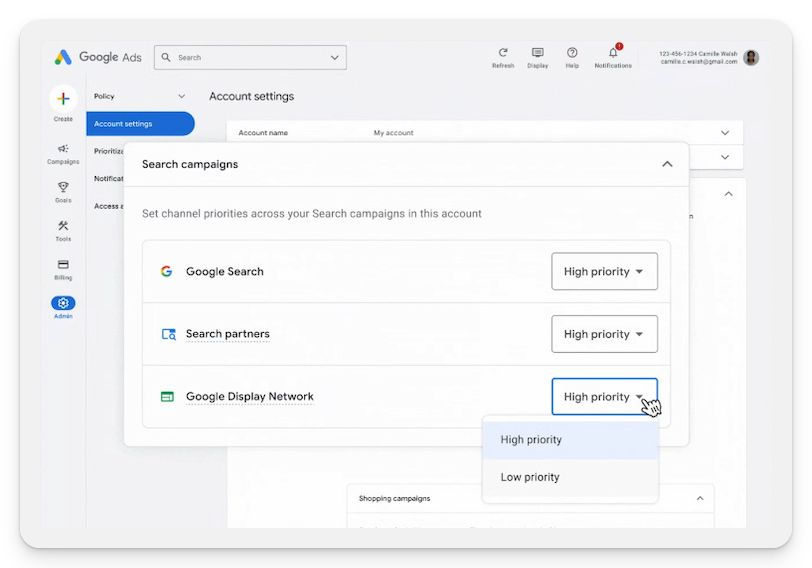
The update introduces the ability to assign high- or low-priority status to eligible channels and place spending caps on lower-priority inventory, including Search Partners and the Google Display Network.
For advertisers who have long called for greater control over Performance Max (PMax), the announcement represents a potentially significant shift.
But while the initial response from PPC professionals has been largely positive, there are important nuances around how these controls work, when they will actually make a difference, and whether Google is also using the update to encourage greater adoption of its partner networks.
Here's what five industry experts had to say.
Performance Max is the biggest winner
One of the strongest themes emerging from the industry reaction is that the update could finally address a longstanding frustration with Performance Max: limited control over where advertising budgets are spent.
Until now, advertisers have had relatively little ability to restrict spending across the different types of inventory bundled into PMax campaigns.
The introduction of budget caps for lower-priority channels changes that.
Menachem Ani described the announcement as something Performance Max advertisers have been requesting for years.
He argued that while Channel Prioritization introduces useful flexibility, Budget Allocation is the more consequential feature.
The distinction matters.
Channel Prioritization allows advertisers to determine which networks should receive budget first, particularly when campaigns are budget-constrained.
Budget Allocation, meanwhile, allows advertisers to cap spending on lower-priority channels at a specified percentage of the campaign budget.
Crucially, that cap can be set to 0%, effectively excluding eligible partner inventory.
For advertisers who have questioned the value of Search Partners or Display Network placements within PMax, this could provide a practical way to test performance without those networks consuming budget.
Andrew Goodman shared similar enthusiasm, suggesting that Performance Max will be the primary beneficiary of the changes.
While Search Partners and Display Network settings may have limited relevance for advertisers who already avoid those networks in traditional Search campaigns, PMax is different.
Many clients have clear preferences about how much budget they want allocated across different types of inventory, but historically haven't had the controls to enforce them.
Goodman sees the new settings as an opportunity to bring campaign execution more closely into line with those preferences.
Google's push to revive Search Partners and Display
Not everyone sees the announcement purely as an advertiser-focused improvement.
Jyll Saskin Gales suggested that one of Google's underlying objectives is to encourage advertisers to reconsider Search Partners and the Google Display Network.
Her interpretation is that the new controls make it easier for advertisers to experiment with inventory they might otherwise exclude entirely.
Rather than committing an unrestricted portion of campaign spending to additional networks, advertisers can now introduce those networks at lower priority and cap their exposure.
That creates a more controlled testing environment.
Reva Minkoff echoed this view, suggesting the timing of the announcement, during Q4, may be connected to Google's desire to encourage incremental spending ahead of the peak shopping season.
Previously, network expansion could feel like an all-or-nothing decision.
The new controls make it possible to explore additional reach while reducing the risk of those networks consuming a disproportionate share of the budget.
Minkoff acknowledged that greater adoption of partner inventory could ultimately generate more revenue for Google.
However, she also made an important distinction: a feature benefiting Google commercially doesn't automatically mean it won't benefit advertisers.
For accounts seeking additional scale, the ability to test new inventory with tighter spending limits could be genuinely valuable.
The real question is whether those additional placements deliver profitable incremental results.
A major caveat: Everything starts at high priority
One of the most important details highlighted by the experts concerns Google's default settings.
Under the new framework, channels will be treated as high priority by default.
This is particularly notable for Search campaigns using Display Expansion.
Saskin Gales pointed out that the Google Display Network has historically been treated as lower priority within Search campaigns.
Under the new system, that implicit preference changes.
For advertisers already opted into Display Expansion, this is worth reviewing carefully.
The new controls won't automatically prioritize Search over Display simply because that's how the campaign previously operated.
Advertisers who want to maintain a preference for Search traffic may need to explicitly assign Display Network inventory a lower priority and introduce a spending cap.
Saskin Gales was particularly critical of this aspect of the announcement, arguing that advertisers using Display Expansion should pay close attention to the change.
Ani also emphasized that advertisers shouldn't expect Google to configure these controls on their behalf.
The default high-priority settings mean advertisers will need to make deliberate choices to benefit from the additional control.
The takeaway: More control is only valuable if advertisers understand and actively use the settings.
Channel Prioritization isn't the same as bid control
Another important distinction is that these updates are designed to influence budget allocation, not directly change bidding behaviour.
Saskin Gales emphasized that the underlying bid strategy remains central to how the system determines which opportunities are worth pursuing.
Google still evaluates opportunities according to the campaign's bidding objectives, conversion settings and available budget.
Channel Prioritization determines the order in which eligible channels receive spending opportunities, rather than independently redefining the value of those opportunities.
This means the impact of prioritization will vary considerably between accounts.
For campaigns that are heavily budget-constrained, the ability to fund preferred channels first could be particularly useful.
For campaigns operating with sufficient budget and well-calibrated target-based bidding, prioritization may have less practical influence.
Saskin Gales suggested the controls become more relevant when advertisers are using Maximize bidding strategies, operating under budget constraints, or optimizing toward conversion actions that don't directly represent final business outcomes.
Aaron Levy also raised an interesting question about the interaction between the new controls and Google's automated bidding systems.
Although Google describes the update as a budgeting mechanism, Levy questioned what happens behind the scenes when advertisers place very restrictive spending limits on particular inventory.
For example, if Display is assigned a tiny percentage of the budget, how will the bidding system respond when it identifies potentially valuable opportunities there?
Google says the update doesn't change bidding behaviour, but Levy's observation highlights an area advertisers will want to examine through real-world testing.
Not all channel controls are created equal
Levy also pointed to a broader challenge within Google Ads: different forms of channel control operate in different ways.
Demand Gen already has channel controls that allow advertisers to select inventory at the ad group level.
But those settings function as inclusion or exclusion controls rather than percentage-based budget allocations.
Conversion value rules operate differently again, adjusting the values used by automated bidding.
Other channel-control experiments have focused on influencing how the bidding system values conversions from particular channels.
The new Channel Prioritization and Budget Allocation features introduce another mechanism, focused specifically on directing spend.
While that adds flexibility, it also means advertisers need to understand which control is appropriate for the outcome they're trying to achieve.
There are limitations, too.
As Ani and Levy both noted, the update doesn't allow Performance Max advertisers to independently switch off specific Google-owned channels such as Gmail, YouTube or Discover.
Those properties remain grouped together for the purposes of these new controls.
So although advertisers gain meaningful control over partner inventory, the update stops short of offering full channel-level budget management across Google's owned-and-operated ecosystem.
That distinction is important when assessing just how much control Google is actually handing back.
Why separating Search and Display still matters
For some advertisers, the new controls won't change their fundamental campaign structure.
Minkoff argued that Search and Display should generally remain separate whenever possible.
Her reasoning is based on the different roles those channels play in the customer journey.
Search typically captures existing demand from people actively looking for products or services.
Display often works differently, introducing brands or offers to users who weren't necessarily looking for them.
Combining those activities can make performance analysis more difficult, particularly when advertisers want to understand the difference between demand generation and demand capture.
For that reason, Minkoff doesn't expect to make extensive use of the controls for traditional Search or Shopping campaigns.
Instead, she sees greater potential in Performance Max and Demand Gen, where Display Network inventory has sometimes absorbed more budget than advertisers would prefer.
Goodman's assessment was similar.
For advertisers who already avoid Display Expansion in Search, the new Search controls may be relatively unimportant.
But for automated, multi-channel campaigns, the ability to influence budget distribution could have much greater practical value.
A welcome sign that Google is listening
Despite the questions surrounding implementation, the overall reaction has been notably optimistic.
Levy described the announcement as a welcome development and an example of Google responding to constructive feedback from PPC professionals.
Advertisers have spent years asking for greater transparency and more meaningful controls within automated campaign types.
While the update doesn't deliver everything on that wish list, it demonstrates progress.
Levy was particularly positive about the ability to create something resembling waterfall budgets, where preferred channels receive funding before lower-priority inventory.
This could help advertisers balance automation with business priorities, rather than relying entirely on Google's decisions about where budget should flow.
And that is arguably the biggest shift represented by the announcement.
Advertisers aren't necessarily asking to abandon automation.
They're asking for ways to guide it.
What advertisers should do next
With the rollout underway and full availability expected by Q1 2027, advertisers have an opportunity to review their channel strategies before making changes.
Several practical priorities emerge from the expert reactions:
Audit existing network settings. Identify campaigns using Search Partners, Display Expansion or Performance Max inventory that may be affected by the new controls.
Review the high-priority defaults. Pay particular attention to Search campaigns with Display Expansion enabled, where the new framework could change the previous implicit prioritization.
Evaluate Performance Max partner inventory. Where available, test lower-priority settings and budget caps for Search Partners or Display Network inventory, including a 0% cap where appropriate.
Consider whether budget constraints are affecting results. Channel Prioritization is likely to matter most when campaigns can't fund every eligible opportunity.
Measure business outcomes, not just channel spend. Reduced spending on a particular network isn't automatically an improvement. Evaluate conversion quality, revenue, return on ad spend and incremental performance.
The experts broadly agree that these controls should be applied strategically rather than automatically.
Some advertisers may benefit from restricting partner inventory.
Others may discover that limited exposure to those networks delivers profitable incremental conversions.
The advantage is having a more flexible way to find out.
The bigger picture: More control, but not complete control
Google's Channel Prioritization and Budget Allocation update is a meaningful development in the evolution of automated advertising.
For Performance Max in particular, the ability to cap spending on partner networks addresses one of the platform's most persistent criticisms.
The industry response reflects that progress.
Saskin Gales sees an opportunity to control unwanted inventory but warns about the default settings.
Minkoff welcomes the ability to test network expansion more cautiously while maintaining that Search and Display should generally remain distinct.
Goodman believes PMax will benefit most.
Ani sees budget caps, particularly the 0% option, as the standout improvement.
And Levy views the announcement as evidence that Google is listening, even as questions remain about how the new settings interact with automation.
What unites these perspectives is the recognition that advertisers need more than visibility into where their budgets are going.
They need the ability to influence those decisions.
Google has taken a significant step in that direction.
But the real test will come when advertisers start applying these controls to live campaigns and assessing whether greater budget control translates into better business outcomes.
For now, the reaction is clear: Advertisers welcome the additional control. Whether it delivers better performance will depend on how intelligently they use it.

Comments